
Alcohol-Related Brain Damage Care: What Happens After Diagnosis
Being told a loved one has alcohol-related brain damage is disorientating, particularly when the diagnosis arrives alongside unfamiliar terms like Korsakoff's syndrome or Wernicke's encephalopathy. Many families are left wondering whether this is something that improves, stays the same, or gets worse, and what kind of support actually helps. This guide answers the questions families and referring professionals most often have after a diagnosis, and what specialist residential care can realistically offer.
What Is Alcohol-Related Brain Damage?
Alcohol-related brain damage, usually shortened to ARBD, is an umbrella term for a range of cognitive and neurological conditions linked to long-term heavy alcohol use, often compounded by a lack of thiamine (vitamin B1). It can affect memory, concentration, planning, judgement and the ability to manage everyday tasks. Wernicke's encephalopathy is the acute, medically urgent stage, treated immediately with thiamine, while Korsakoff's syndrome is the more chronic condition that can follow, marked by significant short-term memory loss. For a fuller clinical picture, Alcohol Change UK's guide to ARBD is a useful starting point alongside this guide.


Is Alcohol-Related Brain Damage the Same as Dementia?
Not exactly, and the distinction matters. Unlike most forms of dementia, ARBD is generally not considered a progressive condition. This means that, unlike a dementia diagnosis where decline is typically expected over time, someone with ARBD may see real improvement once they stop drinking, particularly within the first three to six months.
Can Alcohol-Related Brain Damage Be Reversed?
There is no single answer, and any service promising full reversal for everyone would be overstating things. Recovery is genuinely individual. Some people regain significant memory function and independence. Others, particularly those with more established Korsakoff's syndrome, are left with lasting short-term memory impairment even after they stop drinking, while often retaining clear memory of events from much earlier in life. What can be said with more confidence is that abstinence, structured rehabilitation and regular reassessment give someone the best possible chance of improvement, rather than assuming the picture is fixed at the point of diagnosis.
What Does Specialist ARBD Rehabilitation Involve?
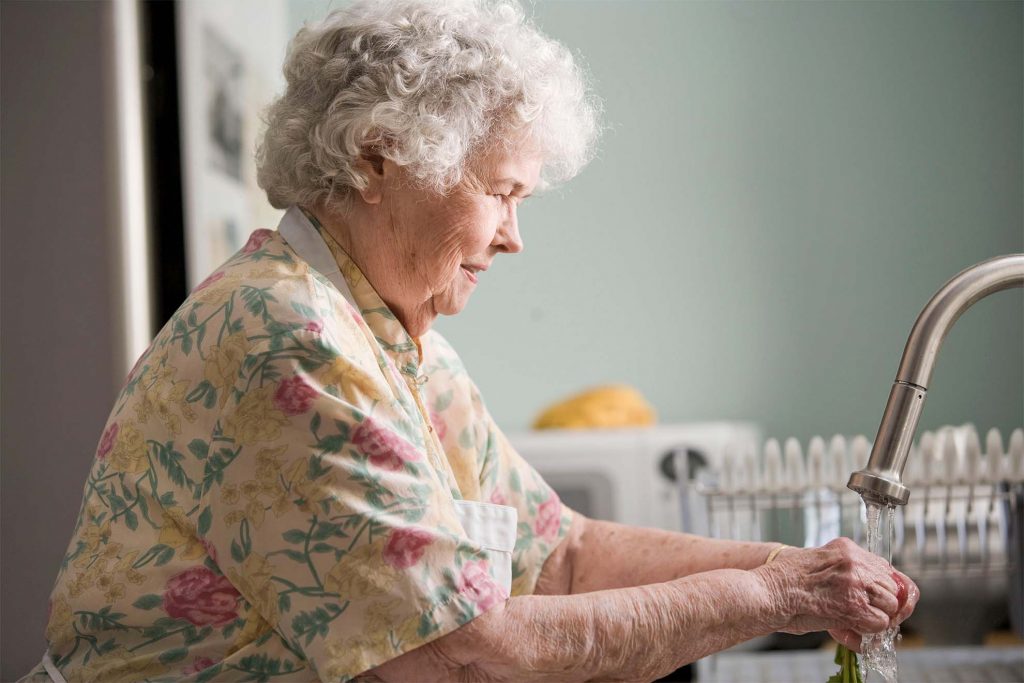
Rehabilitation for ARBD is built into daily life rather than confined to scheduled therapy sessions. At Vane Hill, care begins with an assessment of cognitive function, physical health, nutrition and psychosocial needs, from which an individual care plan is developed. Occupational therapy supports the relearning of everyday tasks and the use of memory aids suited to the individual, while the home's activities programme, including cooking, gardening and shared social activity, gives residents genuine opportunities to practise skills rather than simply being cared for. Where ongoing medical treatment such as thiamine replacement is required, the team liaises directly with local NHS services and prescribers to maintain continuity of care.
What Does Daily Life at Vane Hill Look Like?
Rehabilitation works best when it feels like ordinary life rather than a clinical programme layered on top of it. Vane Hill is set across two converted Victorian houses on a peaceful hilltop above Torquay Harbour, within walking distance of the town centre and seafront, offering residents views across Torbay alongside private gardens and patio space used throughout the year. Communal lounges provide a calm, familiar space for residents to relax, read or spend time with visiting family, while a games room with a pool table, books and internet access supports social connection at a pace each person is comfortable with.
This setting matters practically as well as emotionally. A settled, homely environment in Devon's south coast, close to the coast rather than isolated from it, gives residents a sense of place and routine that supports the wider aims of the 3 Step Enablement Programme, rather than working against them. For families based in Torquay, Torbay or further across Devon, being able to visit regularly and stay involved in day-to-day life at the home is often just as important as the clinical care itself.
How Vane Hill Care Home Supports Families
Vane Hill Care Home, set in two Victorian houses overlooking Torquay Harbour in Devon, has specialised in alcohol-related brain damage care for more than thirty years. The home's 3 Step Enablement Programme is built specifically around this condition, helping residents rebuild practical skills and confidence at a pace shaped by their own recovery rather than a fixed timetable. Every resident is supported by a dedicated key worker providing consistent, one-to-one support, alongside specific pathways for Korsakoff's syndrome and Wernicke's encephalopathy where these apply. Vane Hill accepts referrals directly from GPs, hospital discharge planners, mental health teams, alcohol care teams and social care assessors, with further detail available for referring professionals.
Frequently Asked Questions
What are the early signs of alcohol-related brain damage?
Common early signs include memory lapses, poor concentration, difficulty with planning and judgement, confusion about time or place, and noticeable changes in mood or motivation.
Is Korsakoff's syndrome the same as alcohol-related dementia?
They overlap but are not identical. Korsakoff's syndrome is a specific memory disorder within the ARBD spectrum, typically following Wernicke's encephalopathy, whereas alcohol-related dementia describes a broader pattern of cognitive decline.
Does alcohol-related brain damage get worse over time?
Not necessarily, and this is a key difference from dementia. With abstinence, many people see improvement, particularly in the first few months, though the extent varies from person to person.
How is a decision made about residential ARBD care?
The decision is generally based on function rather than diagnosis alone, taking into account safety, nutrition, capacity, and whether a home-based care plan can realistically be followed.
How do professionals refer someone for specialist ARBD care?
Referrals are usually made by GPs, hospital discharge teams, mental health services, alcohol care teams or social care assessors, with an initial assessment used to confirm the placement matches the person's needs.
Where is Vane Hill Care Home located?
Vane Hill is based in Torquay, Devon, overlooking Torbay, and welcomes visits and enquiries from families across the South West as well as referrals from health and social care professionals nationally.
Considering Vane Hill for Your Loved One
If you are weighing up what the right next step looks like, seeing the home directly and speaking with the team is the clearest way to judge whether it fits your family's situation. You can get in touch with our team to discuss individual needs or arrange a visit.